
A garbage disposal mounts beneath the kitchen sink and connects to the waste piping. Some kitchens also route the dishwasher discharge through a connection on the disposal. The mounting assembly, discharge tube, trap and adjacent drain fittings all need to fit properly. A leak in this area may look like a failed appliance even when the actual source is a loose drain joint.
A cabinet floor can become wet from a disposal, sink strainer, faucet supply connector or dishwasher hose. The timing of the leak matters. Water that appears only when the basin drains often points toward the waste connections. Moisture that continues while the sink is unused may be from a pressurized supply line. The source should be traced before any component is replaced.
A kitchen sink that drains slowly may have grease or debris in the trap or branch drain. Replacing the disposal motor will not clear a blockage farther along the piping. When both bowls drain slowly or wastewater returns to the other bowl, the shared drain arrangement deserves attention. Proper diagnosis distinguishes a disposal problem from a drainage problem.
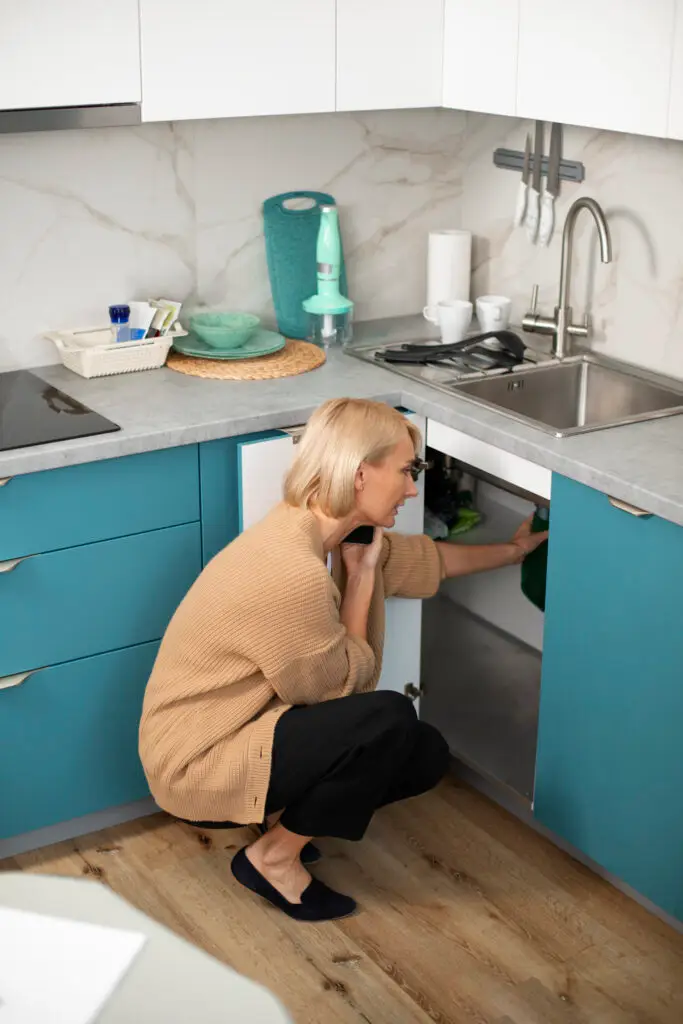
A replacement disposal may have a different outlet height or mounting arrangement. The discharge tube and trap should be assembled without forcing parts into alignment. If a dishwasher connects to the disposal, that connection also needs attention during installation. The goal is a secure drain assembly that remains accessible for inspection and maintenance.
A disposal that hums, trips a reset or will not turn may have an internal appliance problem rather than a plumbing leak. Switch the unit off and follow the manufacturer’s safety guidance. Never reach inside the grinding chamber with your hand. Electrical wiring and internal motor faults should be addressed by an appropriately qualified professional.
Why is there water beneath the garbage disposal? The leak may come from a drain gasket, mounting assembly, hose connection or another sink component. Can a slow sink be fixed by replacing the disposal? Not necessarily; the blockage may be in the drain piping. Is every disposal leak repairable? No. Damage to the appliance body may make replacement more practical. Should I keep running a leaking unit? Avoid using it until the leak is evaluated.
The first step is to learn when the problem occurs and which nearby fixtures are affected. We inspect accessible plumbing connections and consider whether the symptoms come from a supply line, a drain, the fixture or an appliance. A wet cabinet or bathroom floor does not always reveal the exact source. If parts are concealed, further access may be required. We explain what can be observed and what remains uncertain before recommending a repair.
A small localized problem may call for a seal, fitting or valve replacement rather than a complete new fixture. Replacement can be more practical when a component is cracked, badly corroded or repeatedly failing. Availability of compatible parts, access to the installation and the condition of adjacent piping affect the recommendation. We encourage homeowners to review the proposed scope and any exclusions before approving work. Finishing repairs to cabinets, walls or floors may be separate from plumbing service.
If water is actively escaping, turn off a safe, accessible shutoff valve. Avoid touching wet electrical equipment. Remove belongings from a damp cabinet or nearby floor and place a container under a manageable drip if safe. Do not keep operating a fixture that is overflowing or sending wastewater onto the floor. Note whether the problem happens continuously, during water use or only while draining. Photographs of visible connections can help explain the situation when requesting service.
Periodically inspect exposed pipes, valves and connectors for dampness, discoloration or corrosion. Keep shutoff valves accessible so they can be used in an emergency. Do not conceal recurring moisture with caulk or paint before the source is identified. A minor drip can damage wood, drywall or flooring when left unattended. If the same problem returns after repair, the surrounding piping or drainage arrangement may need a broader evaluation rather than another identical fix.
The amount of labor and the materials needed depend on the condition of the existing installation, access to fittings, and whether additional plumbing problems become visible during inspection. A connection in an open cabinet is usually easier to reach than a drain hidden behind finished surfaces. Ask which parts are included, whether additional work might be necessary and how the quote handles unexpected findings. Clear expectations are more useful than a price that assumes every home has the same layout.
ONG Plumbing provides plumbing services in Bethlehem and surrounding Lehigh Valley communities. When you contact us, describe the affected fixture, the symptoms, how long the problem has occurred and whether water is actively leaking. Mention any previous repairs and whether the shutoff valve works. Photos may be helpful when the plumbing is visible. We can discuss the next steps and provide a quote for the proposed work. You can also explore our other plumbing services and contact options.
Tell us what you have noticed and which fixture is affected. We can discuss scheduling and the next steps.