Water supply pipes carry pressurized water to faucets, toilets, showers, laundry equipment and other fixtures. Unlike a drain, a supply line can leak even when nobody is using water. A small drip at a fitting may soak framing or drywall for days before a stain appears. The visible wet spot is not necessarily directly below the damaged connection: water can travel along the pipe, a joist or the back of a wall. Locating the source is therefore the first step, rather than replacing whichever fitting is easiest to see.
Warning signs include unexplained moisture, discoloration on a ceiling, corrosion around a joint, reduced pressure at one fixture, or a water meter that continues moving while fixtures are off. You might hear a faint hissing sound or notice that a cabinet floor remains damp. Some symptoms come from a fixture or drain instead of the pressurized piping. A plumber can compare when the leak occurs and inspect accessible connections before deciding where to open a wall.
Copper water piping is common in older and newer homes throughout the Lehigh Valley. Copper can develop pinhole leaks, damage from freezing, or leaks at soldered, threaded and press-connected fittings. Green or white deposits on copper may indicate past moisture, but discoloration alone does not prove an active leak. A shutoff valve can also leak around its stem, packing nut or connection to the pipe. The repair method depends on the pipe condition, available access and compatibility of the materials.
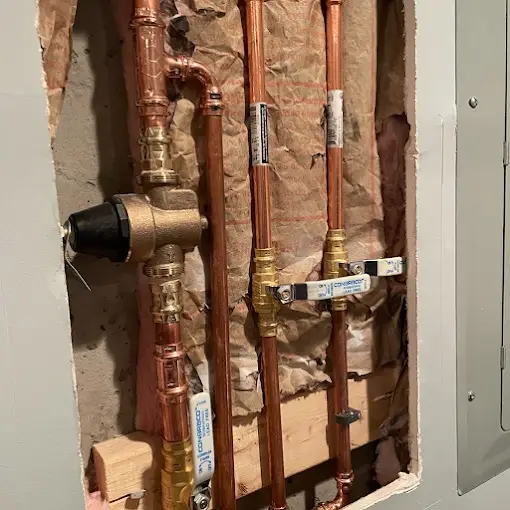
The visit typically begins with questions about when you first noticed water and whether it appears constantly or only during fixture use. The plumber may check accessible valves, joints, exposed lines and nearby fixtures, then narrow down the source. If piping is concealed, limited drywall access may be necessary. Before cutting into finished surfaces, it is useful to discuss what can be inspected without demolition and what the proposed repair will require. Hidden damage may change the scope after the area is opened.
When the surrounding pipe is in sound condition, repairing a damaged segment or fitting may be practical. Depending on the installation, this can involve cutting out a short section and installing suitable replacement pipe and approved fittings. The water supply must be isolated and the system tested after work. A repair is not the same as a promise that every other section of an aging plumbing system will remain trouble-free. If corrosion is widespread or failures repeat, replacing a longer run may be the more sensible option.
Working shutoff valves make repairs easier and reduce the amount of water released during an emergency. A valve that will not turn, drips when operated or fails to stop water should be evaluated. Replacement choices depend on the existing pipe, available clearance and the fixture served. For a leaking angle stop beneath a sink or toilet, the source might be the compression connection, valve body or supply connector. Identifying the exact component avoids replacing parts that are functioning properly.
If it is safe, close the nearest functional shutoff valve or the home’s main water valve. Keep water away from electrical outlets and equipment; do not touch wet electrical devices. Place a container under a manageable drip and move belongings away from the area. Do not cover a leak with permanent finishes before it has been assessed. If the main valve is inaccessible or will not close, explain that when requesting service. Photos of the pipe and surrounding area can help describe the problem.
The price depends on access, pipe material, the number of fittings, the length of piping involved and whether walls or ceilings must be opened. A visible copper joint in an unfinished basement is different from a leak concealed behind tile. The plumber should explain the recommended work and any limits of the estimate before starting. Ask whether drywall restoration, painting or other finish repairs are included; plumbing repairs and cosmetic restoration are often separate parts of a project.
Check exposed piping and shutoff valves periodically for drips or corrosion, especially beneath sinks and near the water heater. Know where the main shutoff is located and keep the area accessible. During freezing weather, protect vulnerable piping according to local conditions and the home’s layout. If water pressure seems unusually high or fixtures repeatedly develop leaks, have the pressure evaluated rather than assuming each failure is unrelated. Timely attention to small leaks can limit damage.
Can a pinhole leak in copper pipe be repaired? A localized leak can sometimes be repaired by replacing the affected section, provided nearby piping is sound. Does a wet ceiling always mean a pipe is leaking above it? No. Water can travel from another location, and drains, fixtures or other building components can be involved. Should I replace every copper pipe? Not automatically. The decision depends on the pipe condition, leak history and inspection findings.
Describe the leak, pipe material and access conditions when you contact us. ONG Plumbing serves Bethlehem and surrounding Lehigh Valley communities.